

Guide to Using the Cradle Reducer
During the first months of life, a newborn needs an environment that recreates, as closely as possible, the protection and containment they experienced in the womb.
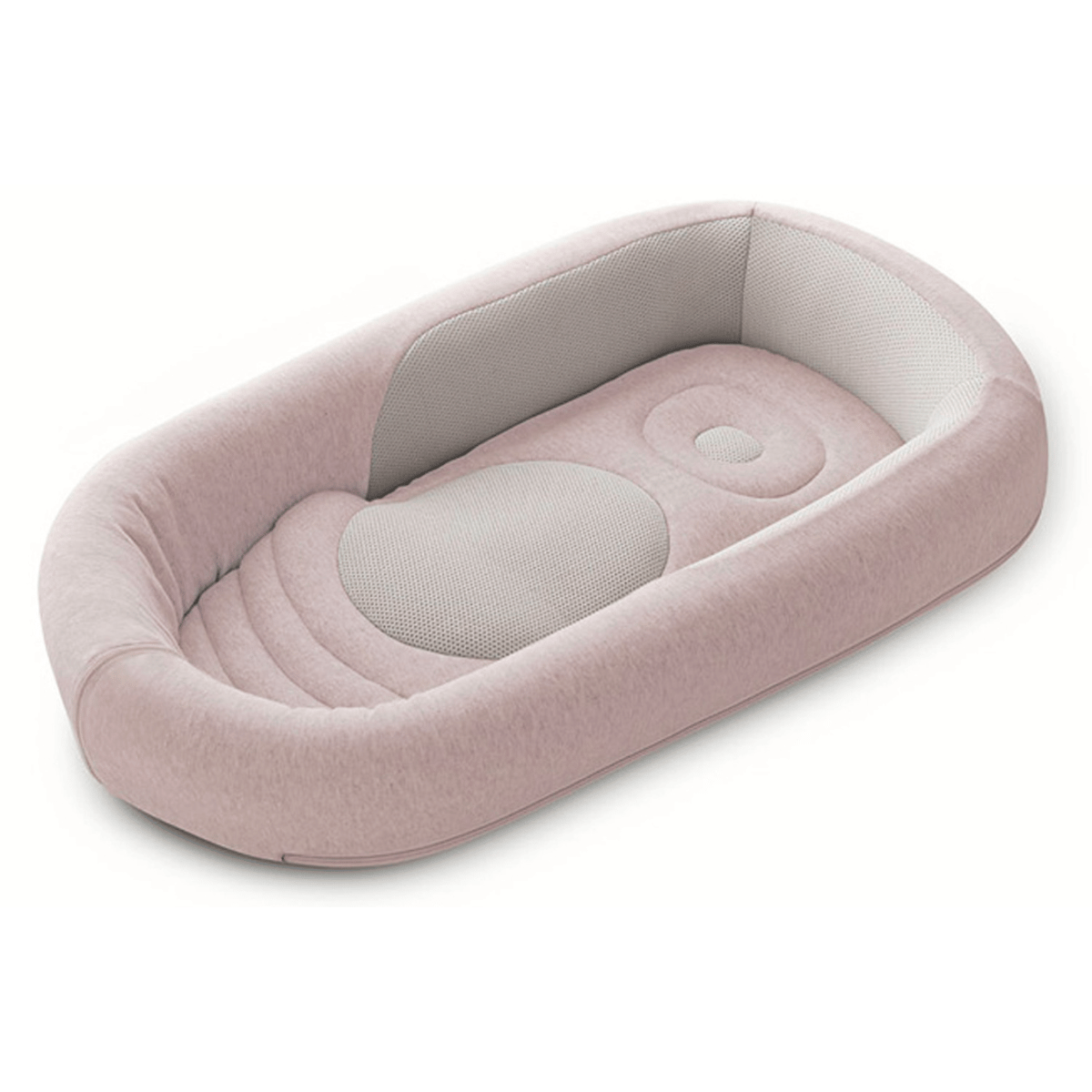
The cot reducer (baby nest) was designed precisely for this purpose: to provide your baby with a cosy, snug, and reassuring space that encourages safe, restful sleep.
This accessory is placed inside a cot, crib, or bassinet to reduce the surrounding space, limit sudden movements, and support proper posture while sleeping. It is especially useful in the early weeks, when newborns are still very small compared to the cot and need that sense of containment to feel secure.
In this practical guide, we’ll explore the main functions of a cot reducer, when to use one, how long it can be safely used, and when it’s time to stop, ensuring comfort and safety for your little one at every stage of early development.
What is a cot reducer for?
A cot reducer (sometimes called a baby nest or sleep pod) serves primarily ergonomic and protective functions. Its padded structure surrounds your baby’s body, reducing the available space and preventing uncontrolled movements during sleep.
This containment has psychological as well as physical benefits, as it helps recreate the safe, enclosed feeling of the womb, promoting a sense of security and supporting more regular sleep patterns.
Here are four key benefits of using a cot reducer for newborns:
- Postural support. A cot reducer helps your baby maintain a stable supine position, reducing the risk of rolling over unintentionally. This not only promotes safer sleep but also supports healthy posture from the very first days of life.
- Soothing the Moro reflex. Newborns often experience the Moro reflex, an involuntary movement where the arms and legs suddenly stretch outward. The baby nest acts as a soft, reassuring barrier that limits these sudden movements, minimizing startle-induced wake-ups and recreating the snug sensation of the womb.
- Thermal comfort. A cot reducer helps maintain a stable body temperature by reducing heat loss and shielding your baby from draughts or cold surfaces. Always choose certified models made with natural, breathable, and washable fabrics to ensure comfort and hygiene throughout use.
- Versatility. Many baby nests are lightweight, portable, and equipped with handles or carry bags—perfect for travel or visits outside the home. This makes it easier to recreate a familiar, comforting sleep environment wherever you go, helping your baby rest more peacefully even in new surroundings.






When to use a baby nest and how long it is recommended
A cot reducer can be used from birth, both for daytime naps and overnight sleep, to provide a snug, reassuring environment. It can also be used for short supervised periods when your baby is awake, as long as an adult is present.
But how long should you use a baby nest?
Usage depends on your baby’s growth and the specific model. In general, cot reducers are suitable up to around 5–6 months of age. Some can be used slightly longer if your baby remains stable and does not yet attempt to roll over.
The safest guideline is to use a cot reducer from birth until your baby’s motor skills require a wider, freer space, usually around 5–6 months. However, every child is different, so always assess them individually.
It’s important to recognise the signs that it’s time to stop using it. If your baby starts rolling independently, trying to push up, or appears restless in the restricted space, it’s best to remove it. Equally, if your baby has simply outgrown the size of the reducer, it should no longer be used.
The cot reducer is a practical, safe, and reassuring accessory during your baby’s earliest months. It encourages better sleep, supports correct posture, and contributes to overall well-being. However, it’s essential to use it consciously, always following the manufacturer’s guidelines and keeping a close eye on your baby’s growth and movements to ensure maximum safety at every stage.
Other new parents have also read...

Guide to Choosing a Crib

How to choose the baby’s little bed

Guide to Choosing a Montessori Bed

How to Organize your Baby’s Changing Table in a practical way

How to Prepare the Perfect Nursery for Your Newborn

What Is a Baby Monitor?

What Is a Newborn Sleep Routine and What Is It For?
